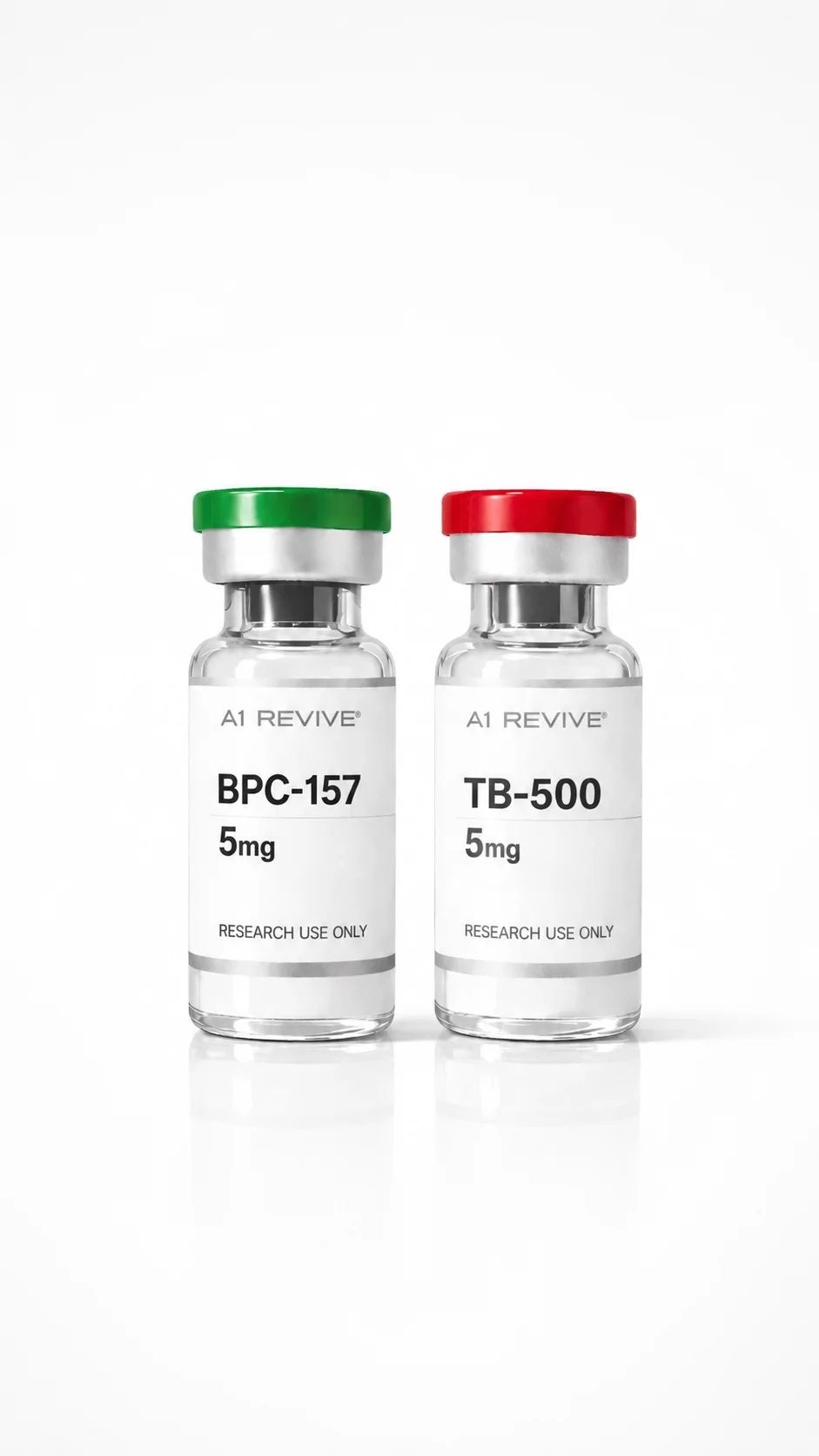
The Wolverine Stack Overview
BPC-157 + TB-500
The Wolverine Stack combines two peptides widely studied for their potential roles in tissue repair, inflammation control, and regenerative healing: BPC-157 and TB-500 (a synthetic version of Thymosin Beta-4).
Together, these peptides are often explored for their ability to support the body’s natural recovery mechanisms, particularly in muscle, tendon, ligament, and connective tissue repair.
While BPC-157 is commonly associated with localized tissue repair and gastrointestinal support, TB-500 is studied for its ability to support systemic tissue regeneration, cellular migration, and recovery from physical stress.
This combination is often discussed among athletes, active individuals, and those focused on accelerating recovery and supporting overall tissue healing.
Muscle and Soft Tissue Repair
Muscle Recovery
Both peptides have been studied for their potential roles in supporting muscle repair and regeneration following strain, damage, or intense physical activity.
Tendon Healing
Research suggests these peptides may influence pathways involved in tendon repair, which can be particularly important for injuries such as tendonitis or tendon tears.
Ligament Support
Studies exploring regenerative peptides have shown potential for supporting ligament recovery and strengthening connective tissue after injury.
Accelerated Injury Recovery
Tissue Regeneration
Both peptides are associated with mechanisms involved in cellular repair and regeneration, which may support the recovery of damaged tissues.
Collagen Production
Collagen plays a key role in healing connective tissues, and these peptides have been explored for their potential influence on collagen synthesis and structural tissue repair.
Improved Healing Environment
Research suggests they may help create a biological environment that supports efficient healing and tissue remodeling.
Inflammation Regulation
Reduction of Inflammatory Signals
Both peptides have been studied for their potential anti-inflammatory effects, which may help reduce tissue stress during the healing process.
Joint and Tissue Inflammation
Some studies suggest these peptides may support recovery in inflamed joints and surrounding connective tissues.
Recovery from Overuse Injuries
Chronic inflammation from repetitive strain or heavy training may be supported through pathways involved in inflammation regulation and tissue repair.
Joint and Connective Tissue Health
Joint Support
BPC-157 and TB-500 have been studied for their potential roles in supporting joint tissue health and structural integrity.
Cartilage and Connective Tissue Repair
These peptides may influence pathways associated with repair and maintenance of connective tissues, including cartilage.
Mobility and Function
Improved tissue repair may help support healthy movement and joint function.
Blood Vessel Formation and Circulation
Angiogenesis
Both peptides have been studied for their potential role in angiogenesis, the formation of new blood vessels.
Nutrient Delivery
Improved blood vessel formation may enhance oxygen and nutrient delivery to injured tissue, supporting recovery.
Tissue Oxygenation
Better circulation may support efficient healing and regeneration processes.
Gut and Gastrointestinal Support
Gut Lining Repair
BPC-157 has been studied for its potential ability to support repair of the intestinal lining, which may play a role in gastrointestinal health.
Ulcer and GI Injury Healing
Animal research suggests BPC-157 may support healing of gastric ulcers and intestinal injuries.
Gut-Body Communication
Research is also exploring its possible role in the gut-brain axis, the communication network between digestive and nervous systems.
Cellular Recovery and Regeneration
Cell Migration and Repair
TB-500 has been studied for its influence on cell migration, an important process in tissue repair and regeneration.
Tissue Remodeling
Both peptides may support restructuring and strengthening of damaged tissues during the healing process.
Recovery from Physical Stress
These regenerative pathways are often studied in the context of recovery from physical strain, injury, and overtraining.